

Xtracars®® Blog
Discover Subscription
Electric cars in Portugal: what you need to know before making the switch
For anyone researching electric cars Portugal, the change is already visible on the road. Electric cars are becoming increasingly common, particularly in and around the country’s largest cities, and what once felt like a future trend is now part of everyday driving.
Between January and August 2026, more than 45,000 new 100% electric passenger cars were registered in Portugal, an increase of 43.1% compared with the same period of the previous year. In August alone, more than one in three new passenger cars registered was electric.
There are more models to choose from, the public charging network continues to expand and electric driving can offer lower day-to-day running costs in the right circumstances. But if you live in Portugal, work remotely from the country or are staying for several months, the questions are usually very practical: how far can you really drive, where do you charge, how long does it take and will an electric car work outside Lisbon or Porto?
If you are researching electric cars in Portugal before buying one, it is worth understanding how they fit into real daily routines, from city commutes to weekends on the road.
Why are electric cars becoming more common in Portugal?
The growth behind searches for electric cars in Portugal has several explanations. One is environmental: a 100% electric vehicle produces no exhaust emissions while driving and can help reduce local air pollution and noise, which is particularly relevant in busy urban areas.
There are also financial reasons to consider. In Portugal, 100% electric vehicles are exempt from Vehicle Tax (ISV) and the annual Single Circulation Tax (IUC), which can reduce some of the ownership costs compared with a combustion car.
Running costs can also be lower, depending on where and how you charge. An ERSE comparison for 2026 estimated a considerably lower cost per 100 kilometers when charging at home than when driving a petrol or diesel car. Public charging, especially at faster stations, can cost more, so the saving depends heavily on your charging habits.
In other words, there is no single answer to "how cheap is an electric car to run?”. Where you charge, how often you drive and the type of journeys you make all matter.
Infrastructure is another important part of the picture. The MOBI.E network currently has more than 15,800 charging points and reaches every municipality in Portugal, including the Azores and Madeira.
What range can you expect from electric cars?
Range is probably the first concern for many people considering an electric car and there is no single number that applies to every journey.
How far you can travel on one charge depends on the battery and vehicle, but also on speed, route, driving style, use of heating or air conditioning and weather conditions. This means the advertised range is best treated as a reference rather than a guarantee for every trip.
A more useful question is how many kilometers you normally drive. If your daily routine is a 30 or 40 kilometers commute and you can charge regularly, your needs are very different from someone who drives several hundred kilometers multiple times a week.
Long-distance driving is also possible, but it benefits from some planning. Check charging stops before you leave and allow more flexibility on routes through rural or inland areas, where stations may be further apart. The MOBI.Data platform can help you find public charging points and check network information before a trip.
Where can you charge an electric car in Portugal?
For drivers comparing electric cars in Portugal, charging usually comes down to three main options: at home, at work or at a public charging station.
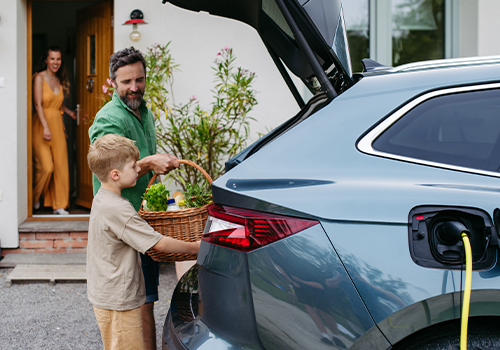
If you have a garage or private parking space where a charger can be installed, overnight charging is often the simplest option. The car is parked for several hours anyway, so it can be ready for the next day. Some workplaces also provide charging, which can be particularly useful if you cannot install a charger where you live.
For everyone else, Portugal has a growing public network with normal, fast and ultra-fast charging points. Faster charging can be useful on motorway journeys or when you need to top up quickly, while slower charging may be perfectly adequate when the car will remain parked for longer.
Charging time does not depend only on the station. The battery size and the maximum charging power supported by the vehicle also matter, so plugging into a more powerful charger does not automatically mean every electric car will charge at the same speed.
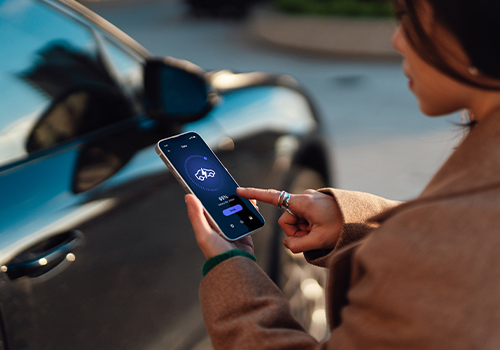
Public charging is also easier if you know how access works. On charging points connected to MOBI.E, users can access integrated stations through a charging service provider’s card or app. Before a long journey, it is worth checking the MOBI.E charging information and keeping the relevant app or card ready rather than dealing with it for the first time at the charger.
How much does charging an electric car in Portugal cost?
There is no single charging price, which is one of the main things to understand when researching electric cars in Portugal.
At home, the cost depends on your electricity contract, fare and the time of day you charge. At work, charging may be free, subsidized or charged separately, depending on the employer or building.
On the public network, the final price can include the electricity itself, use of the charging point, network charges, taxes and the conditions of the charging service provider you use. Prices can also vary according to charging speed, so a fast or ultra-fast top-up may cost more than slower charging.
That is why two charging sessions delivering the same amount of energy do not necessarily cost the same. If you are deciding whether an electric car makes financial sense, compare the cost per kilometer with your current routine. Think about how far you drive, whether home or workplace charging is available and how often you would need public fast charging.

Electric cars Portugal: what about maintenance?
Electric cars may have different maintenance needs from petrol or diesel vehicles, but an electric car still needs maintenance.
Tires, brakes, air conditioning and other components need to be checked and replaced when necessary, and you still need to follow the manufacturer’s servicing schedule. Electric drivetrains have different maintenance needs from combustion engines, but "electric” does not mean maintenance-free.
Maintenance should therefore remain part of your car-use budget, even if some routine mechanical costs may differ from those of a petrol or diesel vehicle.
If you are thinking of buying, there is another factor to consider: electric vehicle technology continues to evolve quickly. New batteries, ranges and models keep reaching the market, which can make some drivers unsure about committing to one vehicle and taking on future depreciation.
For anyone who is still unsure, trying an electric car before buying one can be a useful way to answer those questions with real experience rather than assumptions.
Who can benefit the most from driving an electric car in Portugal?
There is no single ideal profile for electric cars in Portugal, but some routines make the transition easier.
For people living in Lisbon or Porto, an electric car can work particularly well for regular urban and suburban journeys. Daily distances are often predictable, and the growing public charging network gives drivers more options when home charging is not available.
Families with fairly predictable routines, home, work, school and regular activities, may also find it easy to plan charging around the week, especially when they have access to a private or nearby charger.
Remote workers can benefit too. If you do not commute every day, you may have more flexibility over when the car is charged, while still having it available for meetings, errands or weekend trips.
Electric cars can also make sense for people spending several months in Portugal. A car makes it easier to explore beyond the major cities, and someone on a temporary stay may want access to an electric car without immediately buying a vehicle in a new country.
Rural and long-distance journeys are not automatically a problem, but they require a little more planning. If you regularly travel through less populated areas, check charger locations and realistic range before setting off. Drivers who cover very long distances every day and have no convenient charging access may need to assess the fit more carefully.
The best choice is not the car with the biggest battery. It is the one that works with the way you actually travel.
Electric cars in Portugal: do you need to buy one to try one?
No. Buying an electric car means a significant initial investment or finance commitment, taking ownership of the vehicle and eventually dealing with resale and depreciation.
Long-term car hire by subscription works differently. You use the vehicle for the period you need it and pay a monthly fee for the service, without making the same commitment as buying a car.
Xtracars currently has 100% electric vehicles in its fleet, including options such as the Toyota bZ4X or similar and the BMW iX2 or similar. The subscription includes third-party insurance and own-damage cover subject to an excess, 24-hour roadside assistance, a replacement vehicle, maintenance and breakdowns, and tire replacement.
So if you are researching electric cars in Portugal but are not yet sure how range, charging or the driving experience will fit your routine, you can test the reality of living with an electric car without starting with a purchase.
Electric cars in Portugal: try one before you buy
Switching to an electric car does not have to be a permanent decision made on day one.
You can start by seeing how many kilometers you actually drive, where charging fits into your routine, how much your journeys cost and whether an electric car works for city driving, rural trips and longer weekends away.
With Xtracars long-term car hire by subscription, you can choose an electric car and use it for the period that suits you, with an online booking process and key vehicle services included in the monthly fee.
Using electric cars in Portugal is becoming easier every year. And if you are not ready to buy, flexible access can be a smarter first step: drive it, charge it and find out whether it really works for you.