Xtracars®® Blog
Trips and Adventures
Azores Visit: Why Are Portugal’s Atlantic Islands Ideal for a Longer Stay?
An Azores visit is perfect if you want more than a quick holiday. This Portuguese archipelago combines volcanic landscapes, whale watching, UNESCO heritage, thermal springs, quiet roads and authentic island culture. For international travellers, remote workers and anyone planning a slower trip through Europe, the Azores offer nature, safety and good infrastructure in a setting that still feels wild.
Located in the Atlantic Ocean, around 1,500 km from Lisbon, the Azores are an Autonomous Region of Portugal and part of the European Union. That means visitors can enjoy a remote island experience while still benefiting from European standards, good roads, healthcare, mobile coverage, accommodation and modern services.
To make the most of your trip, plan your route before you arrive and rent a car from the first day. Many of the most beautiful places are outside the main towns, so driving makes it easier to explore lakes, viewpoints, natural pools and villages at your own pace.
How do you get to the Azores?
Most international travellers reach the Azores by flying via Lisbon or Porto. From mainland Portugal, there are regular connections to islands such as São Miguel, Terceira, Faial and Pico, depending on the season and route.
São Miguel, with its airport in Ponta Delgada, is usually the easiest entry point for a first Azores visit. Terceira is another practical option, especially if you want to combine culture, nature and access to other islands.
If you want to visit more than one island, you can use inter-island flights. Ferries are also available on some routes, especially between nearby islands such as Faial, Pico and São Jorge. For longer stays, avoid rushing between too many islands and spend enough time on each one.
When is the best time to visit the Azores?
The best time for an Azores visit is usually from May to October. These months offer milder weather, longer days and better conditions for hiking, swimming, whale watching and island hopping.
July and August are the warmest and busiest months. May, June, September and October are excellent choices if you want fewer crowds and a more relaxed pace. The Azores have an Atlantic climate, so the weather can change quickly. It is common to see sunshine, clouds and rain on the same day, which is why flexible plans are important.
Which island should you visit first?
São Miguel is the best island for a first Azores visit. It is the largest island, has strong travel infrastructure and offers a complete introduction to the archipelago.
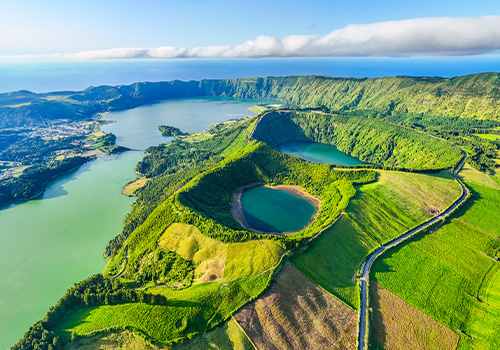
Here you can visit Sete Cidades, where blue and green crater lakes sit inside one of the most famous volcanic landscapes in Portugal. Furnas is known for its thermal waters, steaming caldeiras and traditional cozido cooked underground using volcanic heat. Lagoa do Fogo is ideal for travellers looking for a wilder, more dramatic natural setting.
Why include Faial, Pico or Terceira?
Faial, Pico and Terceira are excellent choices if you want to go beyond São Miguel and understand the diversity of the Azores.
Faial is strongly connected to Atlantic sailing culture. Its main town, Horta, is known for its marina, sea views and relaxed atmosphere. The Capelinhos Volcano, created by the 1957 to 1958 eruption, shows a completely different side of the islands, with dark volcanic landscapes that feel almost lunar.
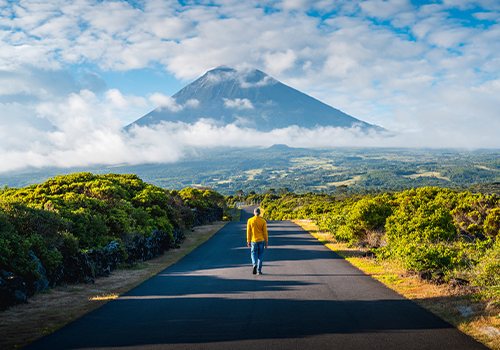
Pico is dominated by Mount Pico, the highest point in Portugal at 2,351 metres. It is a great island for hiking, whale watching and wine culture. Its vineyard landscape is classified as UNESCO World Heritage and is one of the most distinctive cultural landscapes in the country.
Terceira combines history, culture and volcanic nature. Angra do Heroísmo is a UNESCO World Heritage city, while Algar do Carvão allows visitors to enter an ancient volcanic chimney. Serra do Cume is another highlight, with green fields divided by stone walls.
Recommended time: 3 days per island.
Best for: culture, volcanoes, hiking, wine, sea activities and island hopping.
Is Flores worth visiting on a longer trip?
Yes. Flores is one of the most beautiful and remote islands in the Azores. It is perfect for travellers who want waterfalls, lakes, cliffs, silence and pure nature.
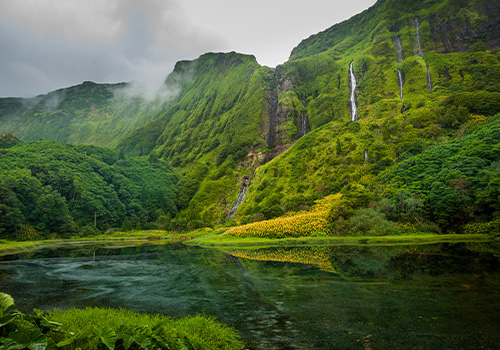
Poça da Ribeira do Ferreiro is one of the island’s most impressive places, with several waterfalls falling down a green cliff into a small lagoon. The roads, viewpoints and small villages make Flores ideal for slow travel and photography.
Because Flores is more remote, book accommodation and car hire early, especially between May and October.
Recommended time: 3 to 4 days.
Best for: wild nature, photography, peace and slow travel.
Are the Azores good for remote workers?
The Azores are increasingly attractive for remote workers and long-stay travellers because they offer a rare balance between nature, safety and modern infrastructure. You can work from accommodation in Ponta Delgada, Horta or Angra do Heroísmo and later drive to a crater lake, natural pool or coastal viewpoint.
The pace of life is slower than in major European cities, but services are reliable enough for longer stays. As part of Portugal and the EU, the Azores feel accessible to many international visitors while still offering a strong local identity.
Why explore the Azores by car?
A car is one of the best ways to experience the Azores. Public transport is limited outside the main towns, and many of the best places are easier to reach independently.
Driving lets you visit viewpoints early, stop at small villages, change plans when the weather shifts and explore each island without fixed schedules.
With Xtracars, you can choose a flexible car hire solution for a short escape or a longer Azores stay. Pick the right car, collect it from your Xtracars station and discover Portugal’s Atlantic islands at your own pace.