Xtracars®® Blog
Car Tips and Tricks
Tyre pressure: do you know the ideal level for your car?
Some car care tasks can be easy to put off, and checking your tyre pressure is one of them. However, driving with too much or too little air in your tyres can affect comfort, fuel consumption and safety.
The good news is that checking your tyre pressure only takes a few minutes. There is no single ideal value for every vehicle, so you should always follow the manufacturer’s recommendation, which can usually be found in one of three places. Want to learn more? We explain everything in this article.
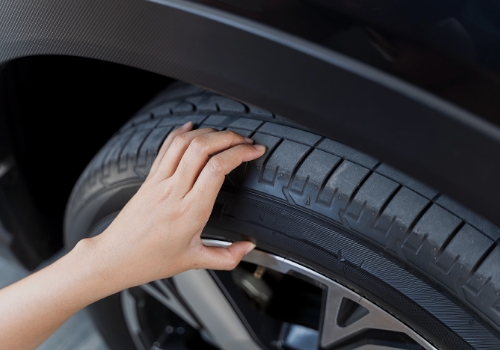
How can I find the correct tyre pressure?
There is no standard value for every car. The correct tyre pressure depends on the model, the type of tyres and the load you are carrying.
For many passenger cars, the recommended pressure is usually between 2.2 and 2.5 bar, but you should not use this range as a general rule. The correct value is always provided by the vehicle manufacturer and can normally be found inside the driver’s door, in the vehicle handbook or near the fuel filler cap.
Many petrol stations also have air pumps where you can usually check your tyre pressure free of charge.
Sometimes tyre pressure is shown in PSI. As a useful reference, 1 bar is equal to approximately 14.5 PSI.
When planning a journey with a fully loaded car, check whether the manufacturer recommends a different pressure for heavier loads. The boot may be full, but your tyres should not have to suffer because of it.
Should I check my tyre pressure when the tyres are cold or warm?
Tyre pressure should always be checked when the tyres are cold. The best time is before you start driving or after the car has been parked for at least two hours.
As you drive, the tyres heat up and the pressure naturally increases. Therefore, checking them immediately after a journey may give you a higher reading than you would get when the tyres are cold.
Do not release air from a warm tyre simply because the pressure gauge shows a high reading. Once the tyre cools down, the pressure may fall below the recommended level.
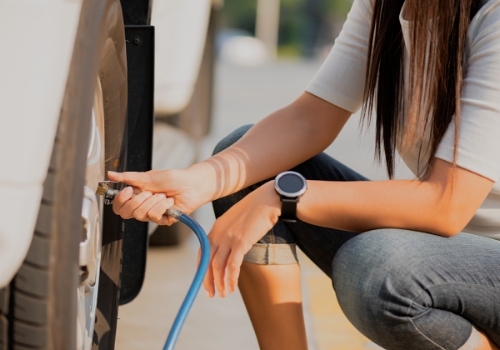
What happens when tyre pressure is too low?
When tyre pressure is below the recommended level, a larger area of the tyre comes into contact with the road.
In practical terms, this can lead to:
- higher fuel consumption
- faster wear along the sides of the tyre
- reduced stability when cornering
- longer braking distances
- a greater risk of overheating
If the steering feels heavier or you notice anything unusual, do not ignore it. Checking your tyres only takes a few minutes and could help prevent a more serious problem. If you notice anything unusual with your subscription car, contact us as soon as possible.
What happens when tyre pressure is too high?
Too much air is not a good idea either. A tyre with excessive pressure has less contact with the road, which can reduce grip and make the drive less comfortable.
The centre of the tyre may also wear more quickly. You are also likely to feel every pothole, speed bump and uneven section of road more clearly. The key is to keep the pressure at the correct level.
How to check your tyre pressure
Checking your tyre pressure only takes a few minutes. Follow these steps to make sure you do not miss anything:
- Check the manufacturer’s recommended pressure, which you can usually find inside the driver’s door, in the car’s handbook or inside the fuel filler flap. Bear in mind that the recommended pressure may differ between the front and rear tyres.
- Check the pressure when the tyres are cold, ideally before setting off or after the car has been parked for some time.
- Use a pressure gauge, available at most petrol stations. Remove the valve cap, attach the gauge and check the reading.
- Add or release air gradually until you reach the recommended pressure. Once finished, replace the valve cap securely.
- Repeat the process for every tyre. Do not forget the spare tyre, if the car has one, as it can also lose pressure over time.
What additional protection can give me greater peace of mind?
Even when you take every precaution, some unexpected situations cannot be avoided. A pothole, a loose stone or a minor impact can damage the wheels or glass of your car.
Xtracars’s Glass and Wheel Protection can give you extra peace of mind in these situations. Simply add it to your booking and enjoy your journey with fewer worries. That is exactly what we want for you.
Why should you pay extra attention in summer?
Heat causes the pressure inside your tyres to rise. During summer, especially before a long trip, it is worth taking a few extra minutes to carry out another check.
Check the tyre pressure, inspect the tread and look for cuts, bulges or signs of uneven wear. The tyres on Xtracars subscription cars are checked regularly. Even so, a quick inspection before setting off is always time well spent.