Xtracars®® Blog
Car Tips and Tricks
Car dashboard symbols: what they mean and when you should act.
Car dashboard symbols are part of your vehicle’s diagnostic system and exist for a very good reason: to communicate with you. Some simply let you know everything is fine, others ask for attention, and then there are those that practically shout and demand immediate action: pull over now or this will get expensive.
The problem is that many drivers, especially less experienced ones, don’t really know what each light means. The result? Anything from a simple breakdown to poor decisions or dangerous situations on the road.
Xtracars explains, without technical jargon or unnecessary drama, the meaning of car dashboard lights, the difference between colours, which ones require immediate action and what you should do in each situation. No panic, but no ignoring the signs either.
Why are car dashboard lights so important?
Car dashboard lights work like a real-time warning system. Whenever something isn’t right, from a simple notification to a serious mechanical issue, your car communicates through illuminated symbols.
Ignoring these signs can lead to:
- More serious mechanical damage.
- Higher repair costs.
- Safety risks for the driver and passengers.
Knowing how to correctly interpret car dashboard lights helps you prevent breakdowns, increase road safety and make better decisions behind the wheel.
What do the colours of car dashboard lights mean?
One of the easiest ways to understand how serious a warning is simply by looking at its colour. Think of them as a traffic light inside your car dashboard.
Green and blue lights: informational.
These lights indicate that a system is active and working normally. They are purely informational. No alarms. You can keep driving.
Common examples:
- Low beam headlights on.
- High beam headlights on.
- Fog lights on.
- Cruise control active (also known as "autopilot”).
Yellow or orange lights: attention needed.
Yellow car dashboard lights mean something isn’t working properly, but it doesn’t require immediate stopping. Your car is basically saying: not urgent, but don’t pretend you didn’t see this.
Common examples:
- Engine warning light.
- ABS.
- Stability control.
- Tyre pressure.
- Airbag.
You can continue driving carefully, but you should check the situation as soon as possible.
Red lights: stop immediately.
Red car dashboard lights indicate serious failures or safety risks. These are the automotive equivalent of a big STOP sign.
They may indicate problems with:
- Engine oil.
- Engine temperature.
- Brakes.
- Power steering.
- Battery.
In these situations, pull over safely and do not continue driving. Pushing your luck here will only make things worse.

Car dashboard symbols and what they mean.
Not all car dashboard lights are the same. Some are common, others appear less often, but all deserve your attention.
Engine warning light.
This can indicate anything from a faulty or moody sensor to a serious engine problem. Common causes include ignition issues, sensor faults or emission system problems.
What to do: if the light is yellow, schedule a vehicle check. If it flashes or turns red, stop the car and do not continue driving.
ABS (Anti-lock Braking System) light.
This may indicate a problem with the ABS, the system that prevents the car from skidding during heavy braking or on wet surfaces.
What to do: drive with caution and schedule a check-up at a garage.
Brake light.
This may indicate that the handbrake is engaged. It may also mean low brake fluid, worn brake pads or problems with the braking system.
What to do: if not related to the handbrake being engaged, drive carefully and schedule a check-up quickly.
Oil warning light.
Indicates low oil pressure or low oil level.
What to do: stop immediately. Driving without oil can destroy the engine in just a few minutes.
Battery warning light.
Related to the electrical system or the alternator.
What to do: avoid turning off the engine in unsafe locations and seek assistance as soon as possible.
Temperature warning light.
Means the engine is overheating.
What to do: pull over, turn off the engine and wait for it to cool down before taking any action.
Tyre pressure warning light.
Indicates incorrect pressure in one or more tyres.
What to do: check tyre pressure as soon as possible to avoid uneven wear or loss of vehicle control.
Airbag warning light.
Indicates a fault in the passive safety system.
What to do: it doesn’t require immediate stopping, but it should be fixed quickly for safety reasons.
Electronic system warning light.
Indicates a fault in the vehicle’s electronic system.
What to do: drive carefully and schedule a check. Ignoring it may lead to more serious failures.
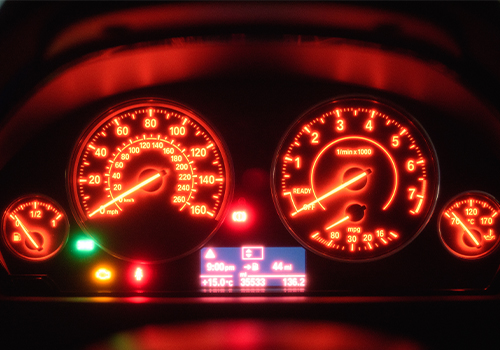
What you should NOT do when a dashboard light comes on?
- Ignore the light for weeks.
- Cover it with tape.
- Assume it will "go away on its own”.
- Keep driving with red warning lights active.
Car dashboard lights are not suggestions. They are warnings. And the sooner you act, the smaller the problem usually is. In mechanics, there’s a rule that almost always applies: ignore it today, pay more tomorrow.
What if a dashboard light comes on while you’re on the road?
It’s not always clear whether you can keep driving or if you should stop immediately. And you’re not always in a safe place or have the technical knowledge to decide on the spot.
That’s exactly where the flexibility of Xtracars’ car subscription makes a difference. When you subscribe to a car, you’re not just driving a modern vehicle, you’re also driving with a full safety net of maintenance, repairs and support included. Nothing is missing.
With TOP Roadside Assistance, included in the Xtracars subscription, you get immediate support in case of unexpected situations. A specialised team helps assess the problem so you don’t have to guess whether it’s safe to keep driving. This helps you avoid rushed or risky decisions.
On top of that, you get on-site assistance, towing or an alternative solution, without stress. When a car dashboard light comes on halfway through your journey, knowing you’re not alone and that you’ll receive clear guidance on what to do changes everything.
Car dashboard lights: less stress, more peace of mind.
Car dashboard lights exist to protect you, not to scare you. Knowing how to recognise colours, understand the main symbols and act at the right time helps prevent bigger problems.
And when you drive with Xtracars’ car subscription solutions, that peace of mind goes even further: access to a modern fleet, up-to-date maintenance and assistance always available if something unexpected happens. Because the dashboard may light up, but panic doesn’t have to be automatic.